Introduction
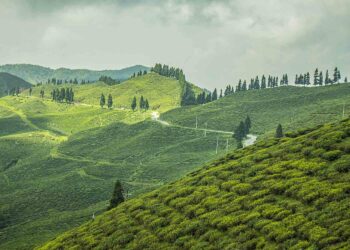
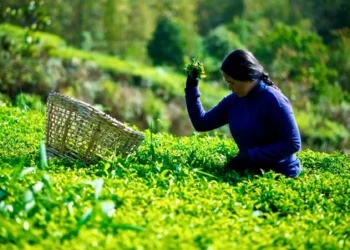
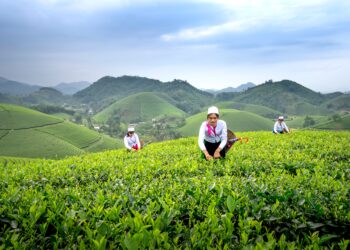
Nepal produces far more than just one kind of tea. Across the country, tea leaves are processed into black, green, white, oolong and specialty teas, while CTC tea forms another important part of Nepal’s wider tea industry.
Most of these teas come from the same tea plant, Camellia sinensis. What makes them different is mainly what happens after the leaves are picked. Withering, rolling, oxidation and drying can turn freshly harvested leaves into teas with completely different appearances, aromas and characteristics.
Nepal’s tea industry is generally divided into two major production categories: orthodox tea and CTC tea. Orthodox tea is strongly associated with the eastern hills, while CTC production is concentrated mainly in the lower-altitude Terai.
In this guide, we’ll look at the main types of tea in Nepal, how they’re made and what to consider when choosing a Nepali tea. For a broader overview of the country’s tea regions, history and industry, explore our complete guide to Nepal tea.
Table of Contents
What Types of Tea Are Produced in Nepal?
Before looking at individual varieties, it’s helpful to understand the difference between a processing method and a finished tea style.
Two of the main processing categories used in Nepal are:
- Orthodox tea
- CTC (Crush, Tear and Curl) tea
Tea leaves can then be processed into different finished styles, including:
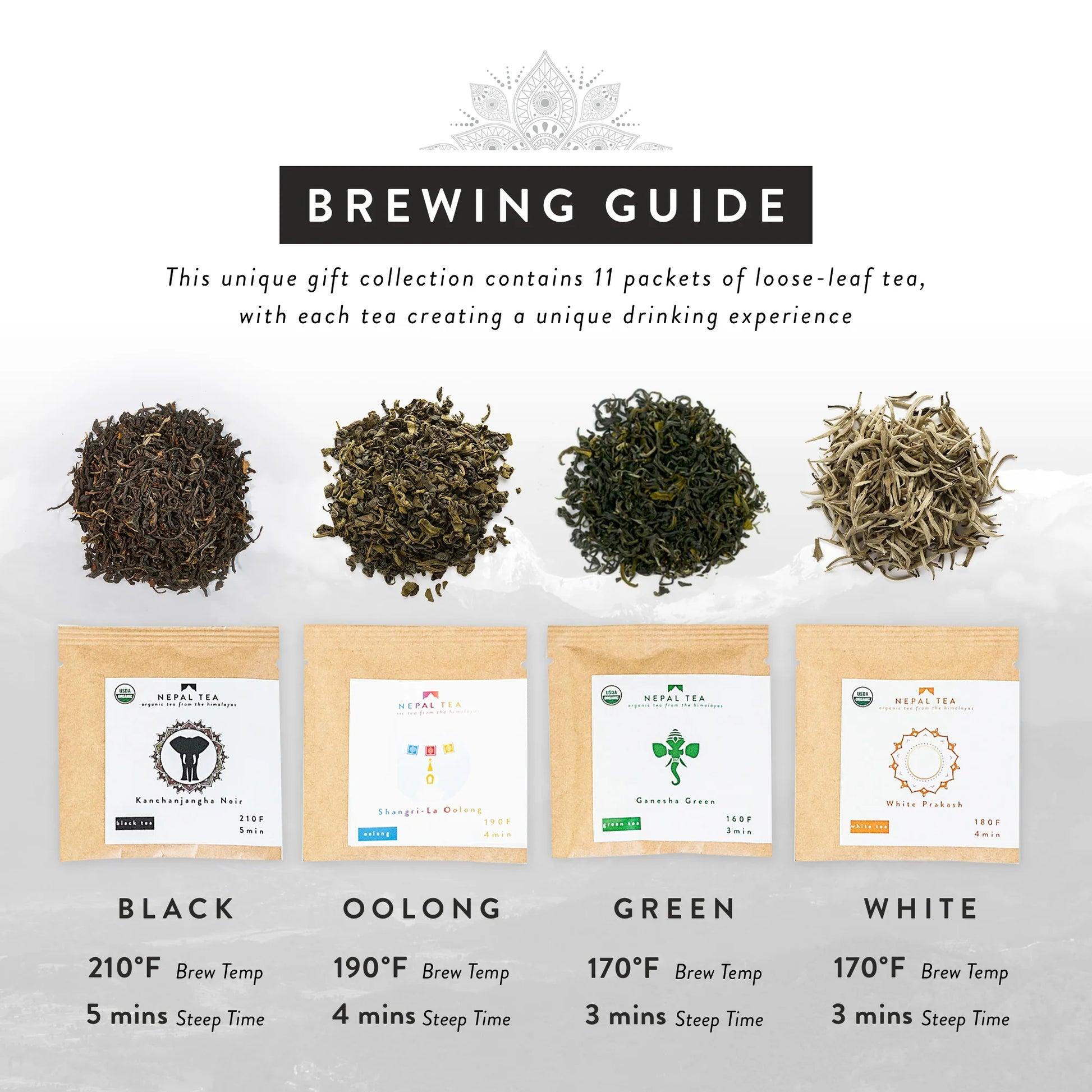
- Black tea
- Green tea
- White tea
- Oolong tea
- Specialty and hand-rolled teas
This distinction is important because terms such as “orthodox” and “black tea” don’t mean the same thing. Orthodox describes a method of processing tea, while black tea describes a finished tea style. Orthodox methods can be used to make black, green, white, oolong and other specialty teas.
Orthodox Tea vs CTC Tea in Nepal
One of the most important differences within Nepal’s tea industry is how the harvested leaves are processed.
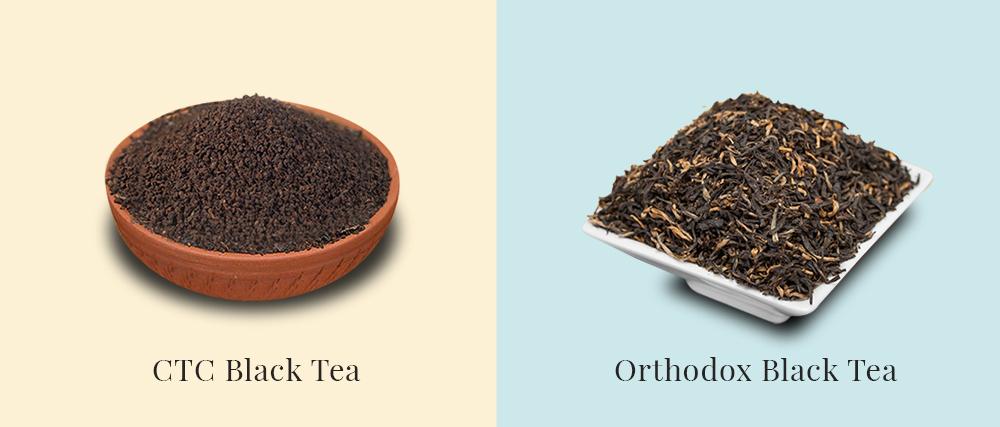
Orthodox Tea
Orthodox processing generally keeps more of the original tea leaf intact. The process commonly involves withering, rolling, oxidation and drying, although the exact steps depend on the type of tea being produced.
In Nepal, orthodox tea is particularly associated with the eastern hill districts, including:
- Ilam
- Panchthar
- Dhankuta
- Terhathum
These regions produce several styles of orthodox tea rather than just one variety. Depending on how the leaves are handled after harvesting, they can become black, green, white, oolong or specialty teas.
CTC Tea
CTC stands for Crush, Tear and Curl. As the name suggests, the leaves pass through machinery that crushes, tears and curls them into small particles or pellets.
This creates a noticeably different product from the larger pieces of leaf commonly found in orthodox tea. In Nepal, CTC production is concentrated mainly in the lower-altitude plains, particularly Jhapa and the Terai region.
CTC tea generally produces a strong cup relatively quickly, which makes it well suited to milk tea and tea bags.
The easiest way to remember the difference is simple: orthodox and CTC describe how tea is processed. They aren’t different species of tea plants.
Black Tea in Nepal
Black tea is one of the major tea styles produced in Nepal. During production, freshly harvested leaves are generally withered and rolled before being allowed to oxidise substantially. Once the desired level of oxidation is reached, the leaves are dried.
Oxidation is responsible for much of the darker appearance of black tea leaves and contributes to the characteristics of the finished cup.
Nepal produces black tea using both orthodox and CTC methods, but the results can be quite different. Orthodox black tea often contains larger pieces of leaf and is commonly sold as loose-leaf tea. CTC black tea consists of much smaller particles and is generally intended to create a stronger brew more quickly.
Nepal’s specialty tea sector also produces distinctive fully oxidised teas, including varieties known as Himalayan Gold or Golden Black Tea.
Green Tea in Nepal
Green tea is another established part of Nepal’s tea industry. Unlike black tea, its processing is designed to prevent the leaves from oxidising extensively after harvesting.
Heat is used during processing to limit oxidation, helping green tea maintain characteristics that are quite different from fully oxidised black tea.
Green tea is produced by a number of Nepalese tea producers, particularly in Ilam. Some producers specialise in green tea, while others make it alongside orthodox black and specialty teas.
This is also why green tea shouldn’t be thought of as a geographical category. Leaves grown in the same general region can become either green or black tea depending largely on how they’re processed.
White Tea in Nepal
White tea is one of the more delicate specialty styles found within Nepal’s orthodox tea sector. Compared with black tea, it generally undergoes less intensive processing.
Young leaves or buds may be carefully harvested, withered and dried with relatively little rolling or other handling. Because production methods vary between producers, however, not every Nepalese white tea will look or taste exactly the same.
Several factors can influence the finished tea, including:
- Growing location
- Leaf and bud selection
- Harvesting season
- Withering
- Drying methods
- Individual processing techniques
For this reason, it’s worth looking beyond the words “white tea” when choosing a product. Information about the tea’s producer, harvest and origin can give you a better idea of what you’re actually buying.
Oolong Tea in Nepal
Oolong tea falls broadly between green and fully oxidised black tea in terms of oxidation.
With green tea, oxidation is strongly limited. Black tea, on the other hand, is allowed to oxidise much more extensively. Oolong sits somewhere between the two, with producers carefully controlling oxidation to achieve the style they want.
Nepal produces oolong as part of its specialty tea sector, although it has traditionally been made by fewer processors than conventional black or green tea.
Because there isn’t one fixed level of oxidation for every oolong, its appearance and characteristics can vary considerably depending on how the producer handles the leaves.
Specialty and Hand-Rolled Teas from Nepal
Nepal’s tea industry includes a range of specialty teas, with producers using different approaches to leaf selection, oxidation, rolling, shaping and drying.. Smaller producers can experiment with leaf selection, oxidation, rolling, shaping and drying to create teas that are quite different from conventional black or green varieties.
Some specialty teas produced in Nepal include:
- Himalayan Gold / Golden Black Tea – a fully oxidised specialty black tea
- Ruby Black Tea – a specialty style of black tea
- Black Pearl Tea – tea processed into small rolled or balled shapes
- Oolong Tea – a partially oxidised specialty tea
- Hand-Rolled Tea – tea shaped and processed using hand-rolling techniques
These specialty tea styles are documented in Nepal’s official tea-sector research and export strategy. These varieties show why Nepal tea shouldn’t be thought of as one uniform drink. Even teas within the same general category can differ depending on the producer, harvest and processing choices.
How Processing Creates Different Types of Tea
One of the easiest ways to understand the different types of tea in Nepal is to look at what happens after the leaves are harvested. Fresh leaves can follow very different processing paths depending on the tea a producer wants to make.
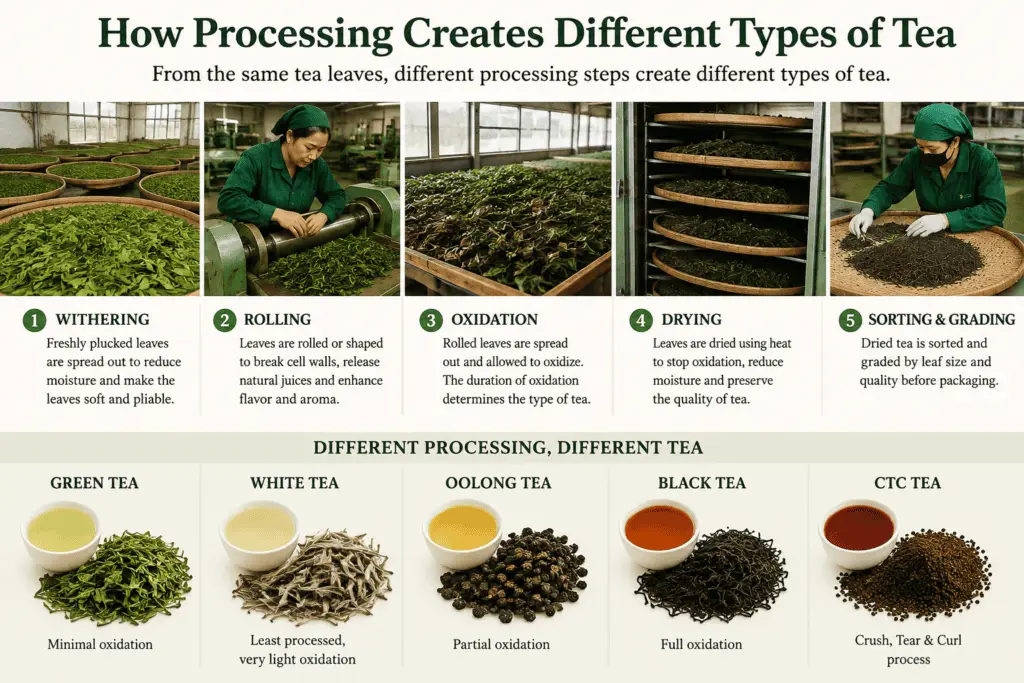
Withering
Freshly picked tea leaves contain a significant amount of moisture. During withering, some of this moisture is gradually removed, making the leaves softer and easier to handle during the next stages of processing.
Rolling or Shaping
After withering, the leaves may be rolled or shaped. In orthodox production, rolling can help maintain recognisable pieces of leaf while preparing them for further processing.
CTC production takes a different approach. The leaves are mechanically crushed, torn and curled into much smaller particles.
Oxidation
Oxidation is one of the biggest factors separating different styles of tea. The amount of oxidation allowed during processing can significantly change the finished product.
In simple terms:
- Green tea → oxidation is strongly limited
- Oolong tea → oxidation is partially controlled
- Black tea → oxidation is extensive
- White tea → processing is relatively minimal, although some natural oxidation can occur
This is one reason leaves from the same tea plant can eventually become very different types of tea.
Drying
The final major stage is drying. This reduces moisture in the processed leaves and helps stabilise the tea before it is sorted, graded, packaged and prepared for sale.
Together, these processing decisions explain why tea grown in similar locations can end up looking and tasting very different.
Does the Growing Region Affect the Type of Tea?
Yes, but growing region and tea type aren’t the same thing.
A geographical name such as Ilam tea tells you where the tea comes from. A term such as green tea tells you more about how the harvested leaves were processed.
Ilam, for example, has producers making orthodox, green and specialty teas rather than producing only one type of tea. If you want to learn more about the region itself, you can read our complete guide to Ilam tea, which covers its tea-growing history and production in more detail.
The same principle applies to organic tea. “Organic” refers to production standards rather than the finished tea style. An organically produced tea can still be black, green, white or oolong depending on how the leaves are processed.
How to Choose a Type of Nepal Tea
There’s no single type of Nepal tea that’s right for everyone. A better approach is to start with the kind of tea you enjoy and then explore different producers and regions.
If you prefer a traditional loose-leaf experience, orthodox black tea can be a good starting point. If you’re looking for tea with limited oxidation, consider green tea. Those interested in minimally processed specialty teas can explore white tea, while oolong tea offers something between green and fully oxidised black tea.
CTC tea may be more suitable if you prefer a stronger brew, particularly when preparing tea with milk.
Once you’ve chosen a style, look at a few other details before buying:
- Origin – Where was the tea grown?
- Producer – Who grew or processed the tea?
- Harvest – Is a season or flush mentioned?
- Leaf grade – Is it whole leaf, broken leaf or another grade?
- Processing method – Is it orthodox, CTC, hand-rolled or another method?
- Organic certification – If organic tea matters to you, is there credible certification or verification?
Looking at these details gives you a much better picture of a tea than choosing it based only on the name or packaging. Learn more about organic production and certification in our guide to organic tea in Nepal.
Final Thoughts
Nepal’s tea industry is much more diverse than it might first appear. The country produces everything from strong CTC tea in the Terai to orthodox black, green, white, oolong and specialty teas from the eastern hills.
Much of this variety comes down to what happens after the leaves are harvested. Different approaches to withering, rolling, oxidation and drying can turn leaves from the same tea plant into completely different finished teas.
Once you understand these basic differences, exploring Nepal tea becomes much easier. Instead of simply looking for “Nepal tea,” you can start comparing the tea style, growing region, producer, harvest and processing method to find something that suits your preferences.
Want to learn more about Nepal tea? Explore our guides to Ilam tea, organic tea in Nepal, Nepal’s tea-growing regions and traditional tea production.